
Ahead of Salzburg Global's latest Culture, Arts and Society program, AI art curator Luba Elliott reflects on AI's impact on the arts and culture sector
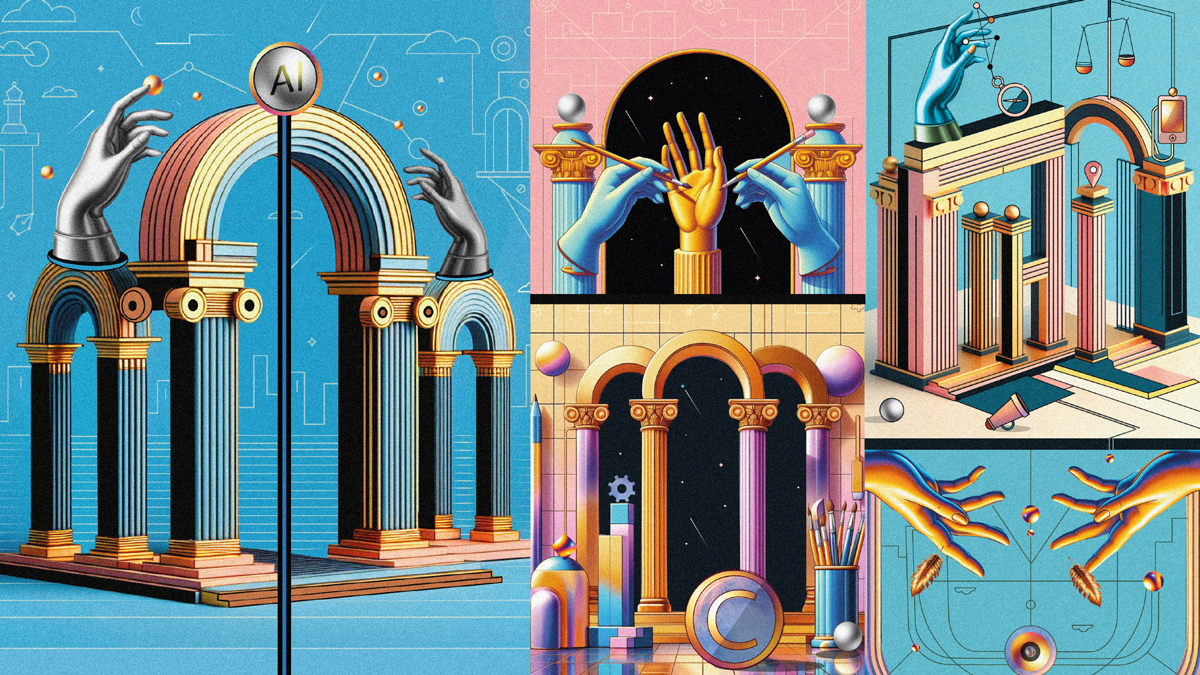
Artificial intelligence (AI) has been having an increasing impact across industries over the past decade. Prompt-based tools such as ChatGPT and Stable Diffusion enable us to produce new texts and images quickly and easily from a set of instructions, while technologies such as facial recognition check our faces at passport control, recommendation engines make suggestions on what to buy on Amazon and voice assistants such as Siri and Alexa provide weather forecasts and adjust the music volume.
AI has many different guises, but on the whole, refers to a range of systems designed to mimic human cognitive functions such as reasoning, perception, and interaction with the world around us. Some of the most popular approaches today involve machine learning and reinforcement learning. In machine learning, AI algorithms learn to find patterns in large datasets of millions of images, texts, or sounds and then reproduce them to create new data, whilst reinforcement learning systems rely on rewards to learn optimal behavior in a particular environment.
This rise of these new AI technologies has brought to the forefront a number of concerns regarding how these technologies are developed, trained, and applied across business and society. Issues such as bias in datasets, copyright infringement, job replacement, and governance are debated by policymakers and organizations.
As AI enters day-to-day work practices across sectors, it is crucial that we consider its long-term impact on global society and develop guidelines for fair, transparent, and responsible use of AI before unrepresentative visions, applications, and practices become entrenched.
Looking at the arts and culture sector in particular, the latest generative AI models, such as ChatGPT and DALL-E, are poised to threaten the livelihoods of illustrators, writers, and graphic designers through their ability to produce high-quality images in a variety of artistic styles, coherent essays for all contexts and effective logos and marketing campaigns.
Instead of simplifying the lives of creatives by taking away the administrative tasks of accounting and running a business, AI systems can now complete the creative work we typically enjoy. Worse still, these AI models have frequently trained on datasets of artworks scraped from online art and photography communities, profiting from decades of creative effort without providing financial reward or acknowledgment.
Notwithstanding the current concerns, artists have had a long and fruitful relationship with technology for decades, from Harold Cohen’s art-making computer program AARON and the generative art of Vera Molnar to the current generation of artists such as Mario Klingemann, Sougwen Chung, and Refik Anadol who use AI to construct new understandings of the world, explore the potential of human-machine collaboration and create interactive experiences.
With these new tools come new creative possibilities, and it is vital that all artists are able to explore these in the global arena of multiple cultures and ways of seeing the world. To achieve that, we need to increase the levels of AI literacy and engage new and experienced generations of artists, underrepresented groups, and Indigenous communities so that everyone is able to share their perspectives authentically and make their mark in AI development.
With their ability to work critically with technology, artists play a key role in seeking out AI’s flaws, inaccuracies, and limitations, as well as questioning the applications of technology across society. Artists such as Adam Harvey, Mimi Onuoha, Kate Crawford, and Trevor Paglen explore ways of evading facial recognition, uncovering missing datasets, and highlighting the bias in image recognition systems. As these tools continue to develop and mature at a rapid pace, we need continuous artistic engagement to test out the unexpected use cases of technology and develop inclusive AI systems.
The Salzburg Global Seminar program, “Creating Futures: Art and AI for Tomorrow's Narratives,” co-created from the concerns, questions, and interests of 50 participants from 25 countries, will cover five themes that look at how art and AI can shape a better future for everyone. These will focus on human-AI relations, creative intelligence, ethics, A.I. for all, and Indigenous narratives.
These themes are particularly meaningful for today’s discussions on AI art because they explore the multiple ways of working with AI systems to enhance creativity, build on AI’s unique affordances, and develop new ways of collaboration between humans and machines. The associated ethical challenges, including intellectual property rights, governance models, and broader societal implications of generative AI, will also be addressed. Finally, the program will focus on creating more inclusive AI systems that promote cultural diversity and support global narratives, as well as developing strategies for integrating Indigenous voices and challenging colonial legacies.
By exploring these five different strands through the perspectives of artists, researchers, curators, and creative professionals, we plan to develop resources and guidelines that will help stakeholders in the broader AI and art ecosystems include diverse perspectives for the development of a better future for all.